

Follow Bioscience Institute
The largest clinical validation in the world
To date, more than 3,000,000 G-test have been performed in over 52 countries. The data obtained indicate:
- A sensitivity greater than 99% (ability to correctly identify a fetus affected by the genetic anomalies object of the test
- Very high sensitivity not only for Trisomy 21 but also for Trisomy 18 and Trisomy 13
- The lowest no call rate between existing fetal DNA tests (only in 0.069% of cases it is impossible to provide the result of the test). The other tests based on selective DNA sequencing have a no call that normally exceeds 5% (5 out of 100 analyzes do not produce a result)
- A very low percentage of false positives (less than 0.05% of cases a high risk result is not confirmed)
- A very low percentage of resampling (only in 2.8% of cases it is necessary to repeat the blood sample to obtain the result of the test)
Validation
The reliability of the G-test was validated through a study involving 146,958 pregnant women. This is the largest study ever published for the validation of a non-invasive prenatal test on fetal DNA from maternal blood.
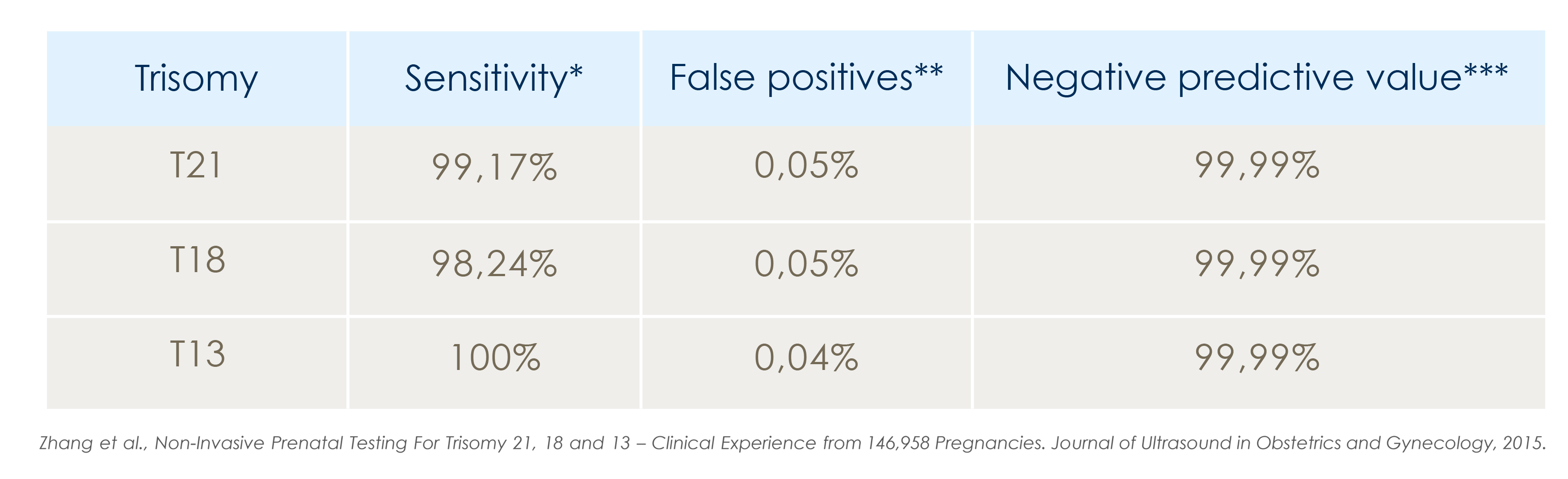
Sensitivity and specificity data, shown in the table below, refer to 112.669 tests, carried out as part of the study, for which it was possible to obtain a diagnostic check of the result. To date, over 2,500,000 tests performed worldwide are in line with the validation study data.
Quality assured
The guarantee of reliability coming from the widest scientific validation existing makes the G-test the only one in the world through which it is possible to access an insurance coverage.


