CANCER DRIVER INTERCEPTION, Systemic Inflammation, Gut Dysbiosis, Genomic Instability, Immune System Deficiency, PRENATAL SCREENING, G-TEST, ULTRANIPT , ULTRANIPT DG, OMNIPT, Inherited Metabolic Disorder, Severe Combined Immunodeficiency, Lysosomal Storage Diseases, CANCER EARLY DETECTION, Solid Cancer, Breast and Ovary, Lung, Colon and rectum, Genome Instability, AESTHETICS STEM CELLS, Skin Rejuvenation, Face Reshaping, Breast augmentation, Buttock enhancement, Scar Reduction, Hair Loss, Female rejuvenation, Penis enlargment, HEREDITARY CANCERS DRIVERS, Endometrium, Colon, Solid Cancers, Breast and Ovary, REGENERATIVE STEM CELLS, Orthopedics, Premature Ovarian Failure, Erectile dysfunction, Anti-aging Therapy iV, Empty Nose Syndrome, Body Performance, Supportive Care, CANCER DIAGNOSIS, Colon and Rectum, Breast, Ovary and Prostate, Lung Cancer Assay, Liquid Biopsy, STEM CELL EXOSOMES, Skin Aging, Hair Loss, Orthopedics, Erectile Dysfunction, Female Rejuvenation, Body Performance, Anti-Ageing, PREVENTIVE CANCER THERAPY, Systemic Inflammation, Dysbiosis, Genomic Instability, Immune Deficiency, STEM CELL BANKING, Cord Blood Derived, Cord Tissue Derived, Adipose Tissue Derived, EXOSOME COSMETICS, X-FILL – Eye & Lip Contour, X-LIFT – Firm Facial Lifting, X-SKIN- Advanced Moisturizing, X-HAIR – Hair Loss Treatment
Skip to main content

The G-test is a non-invasive prenatal analysis for screening fetal chromosomal diseases.
From a maternal blood sample, important information on the health of the fetus is obtained, without compromising the pregnancy in any way.
Thanks to the next generation sequencing technology (Next Generation Sequencing) and the use of specific proprietary calculation algorithms it is possible to sequence the fragments of the DNA present in the maternal plasma to attribute its belonging to a specific chromosome, thus evaluating aneuploidies and chromosomal anomalies structural.

HOW DOES IT WORK
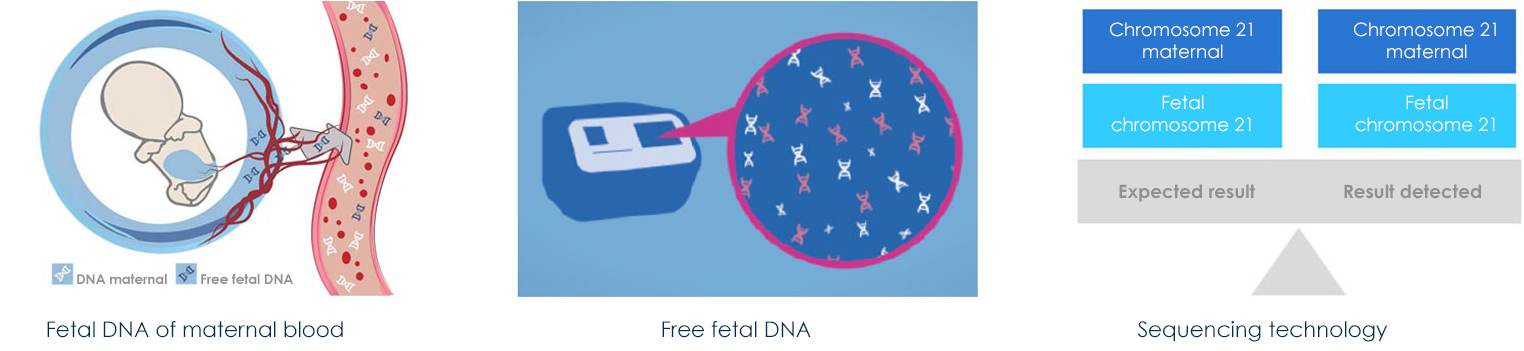
Cell free fetal DNA from maternal blood

During the first weeks of pregnancy, the embryo is fed by a group of cells (trophoblast) that will give rise to the placenta. Some of these cells will "break" naturally and will pour into their mother's bloodstream the DNA contained in them, in the form of fragments, going to make up what is called free fetal DNA.

Sequencing technology

The new generation sequencing (NGS) allows to order all the fragments of free DNA belonging to a specific chromosome and to compare them quantitatively with those normally present in a healthy individual to define the risk (high or low) that the fetus may be affected by chromosomal anomalies object of the test.

×

Information Request


    Privacy Policy (*)